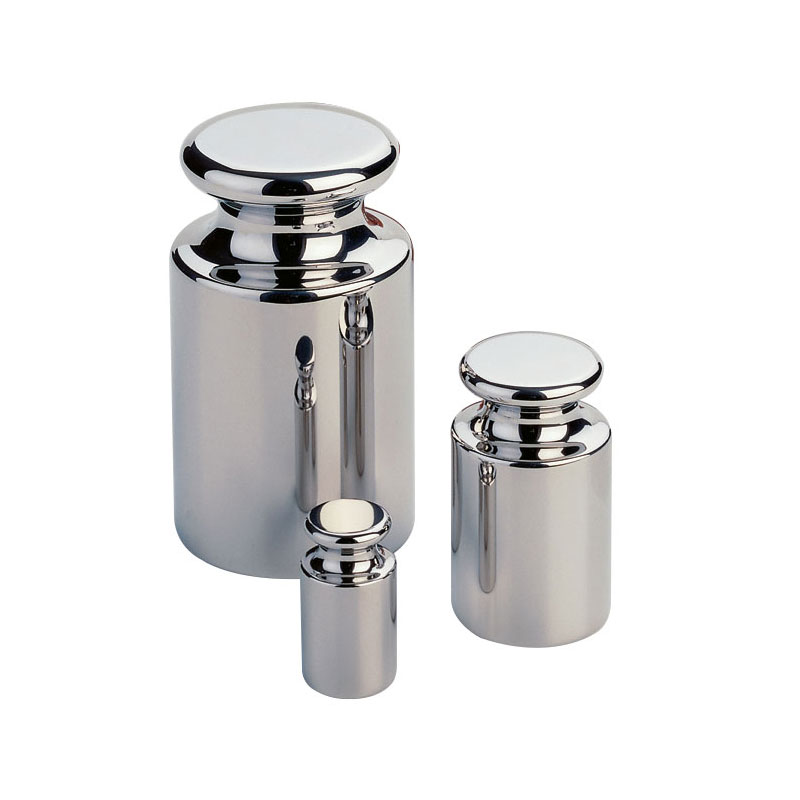
Stainless steel single test weights

Polished corrosion resistance stainless steel test weights

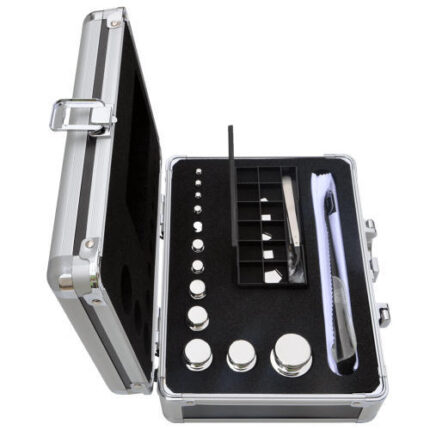
Soft padded canister for safe storage

Available accuracy classes- OIML Class M1, M3, F1, F2

Commonly used to test scales in food, pharmaceutical, laboratory, dairy and meat processing industries.

Features

Available denominations:

1g, 2g, 5g, 10g, 20g, 50g, 100g, 200g, 500g, 1000g, 2000g, 5000g

Other weights available on request


Frequently Asked Questions:

Q: Why should I choose stainless steel test weights over cast iron?

A: Stainless steel test weights are the superior choice for environments requiring long-term precision and hygiene. Unlike cast iron, stainless steel is non-corrosive and non-reactive, meaning the weight value will not drift due to rust or oxidation. This ensures your calibration weights maintain their OIML R111 accuracy standards for a significantly longer period, even in demanding New Zealand industrial settings.

Q: Which industries require stainless steel calibration weights?

A: These weights are essential for industries governed by HACCP, SQF, or BRCGS hygiene and accuracy standards. This includes food and beverage manufacturing, meat processing plants, pharmaceutical labs, and cosmetic manufacturing. Because they are easy to sanitize and non-magnetic, they are the benchmark for clean-room and high-accuracy laboratory environments.

Q: What do the different OIML accuracy classes (F1, F2, M1) mean?

A: Accuracy classes define the “Maximum Permissible Error” (tolerance) of a weight.

  • Class F1 & F2: High-precision standard weights used for external calibration of analytical and precision balances.

  • Class M1: Industrial-grade weights used for daily verification of bench scales, floor scales, and trade-approved weighing equipment. Choosing the right class is critical for ISO 9001 compliance; a high-resolution lab balance requires an F1 class weight to confirm its accuracy.

Q: Do these stainless steel weights come with a Calibration Certificate?

A: Yes. We provide weights that are traceable to national standards. For industries requiring IANZ or ISO/IEC 17025 level documentation for audits, we can supply certificates that confirm the weight’s mass and uncertainty, providing the metrological traceability required for pharmaceutical QC and export-grade food production.

Q: How do I maintain the accuracy of my calibration weights?

A: To preserve the traceable accuracy, always handle high-precision weights (F1/F2) with specialized tweezers or lint-free gloves to avoid transferring skin oils. We recommend storing them in their provided protective padded cases to prevent microscopic scratches, which can alter the mass over time.

Customer Reviews

Rated 5 out of 5

“A review from a customer who benefited from your product. Reviews can be a highly effective way of establishing credibility and increasing your company's reputation.”

Rated 5 out of 5

“A review from a customer who benefited from your product. Reviews can be a highly effective way of establishing credibility and increasing your company's reputation.”

Enquire About This PRoduct